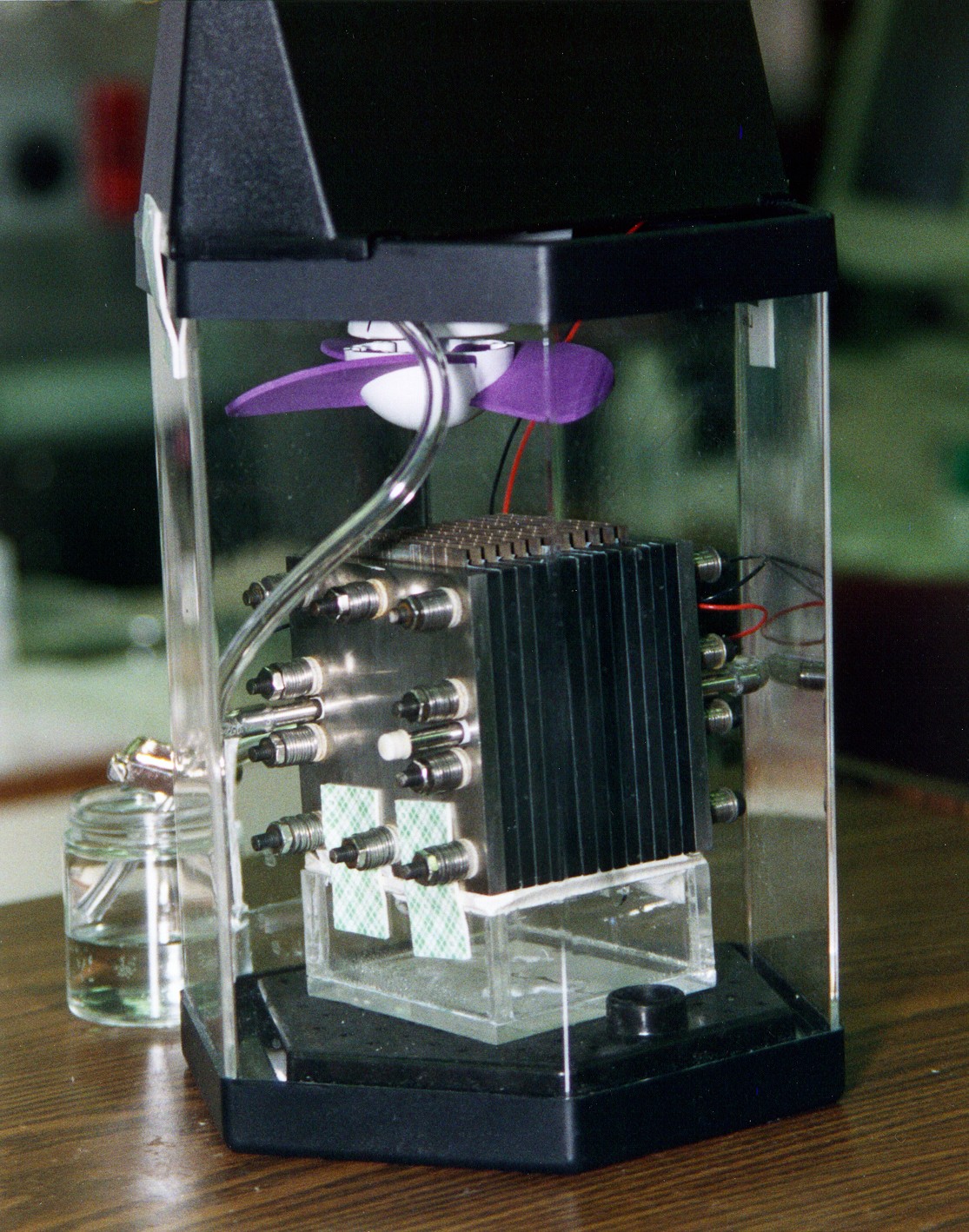
As countries race to cut carbon emissions, hydrogen fuel cells keep resurfacing in policy debates and automotive boardrooms. Unlike batteries that store charge, a fuel cell generates electricity on demand by reacting hydrogen with oxygen. The chemistry is elegant, the emissions profile is appealing, but the road to mass adoption remains steep.
The Core Reaction
Inside a fuel cell, hydrogen molecules split into protons and electrons at the anode. The protons travel through an electrolyte membrane while the electrons are forced around an external circuit, creating an electric current. At the cathode, oxygen combines with those protons and electrons to form plain water. The overall equation is simple: 2H₂ + O₂ → 2H₂O + electricity.
Most passenger-vehicle fuel cells today use a polymer electrolyte membrane and run at roughly 80–100 °C. Under ideal conditions, theoretical efficiency can approach 60%, though real-world systems typically deliver 40–50% because of heat losses, air pumping, and humidification needs.
Beyond Cars
While Toyota's Mirai and Hyundai's Nexo dominate headlines, stationary power is arguably where fuel cells deliver the most value right now. Data centres, hospitals, and telecom towers use them as backup generators because they start quickly and run quietly. In South Korea, fuel-cell power plants already supply grid-scale electricity. Industrial forklifts in warehouses are another quiet success story: they refuel in minutes and work around the clock without the long charging breaks required by battery equivalents.
The Two Hurdles: Cost and Infrastructure
The biggest bottleneck is not the cell itself but the hydrogen supply chain. Producing hydrogen cheaply usually means steam-reforming natural gas, which releases CO₂. The cleaner alternative, electrolysis powered by renewable electricity, remains two to three times more expensive. Until carbon pricing or subsidies close that gap, so-called "grey" hydrogen will dominate the market.
Refuelling infrastructure is the second obstacle. Building a hydrogen station costs roughly ten times more than installing fast-charging points for battery vehicles. That economic reality explains why hydrogen passenger cars are common only in pockets of California, Japan, and South Korea.
What Comes Next
Research is advancing on multiple fronts. Solid-oxide fuel cells, which operate at much higher temperatures, can reach efficiencies above 60% and are well suited to industrial heat-and-power applications. Meanwhile, chemists are experimenting with platinum-free catalysts to cut material costs, and engineers are improving membrane durability so stacks last longer.
Hydrogen fuel cells are unlikely to replace batteries in small passenger cars anytime soon. But for heavy trucks, long-distance buses, ships, and aircraft, the combination of fast refuelling and high energy density makes hydrogen a compelling complement rather than a competitor. The science is sound; the economics are still catching up.